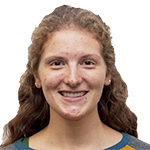
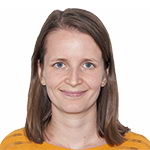
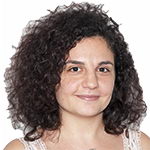
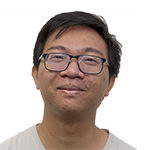
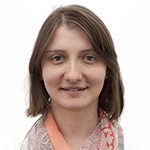
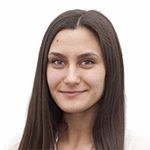
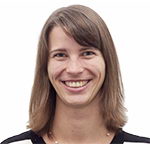
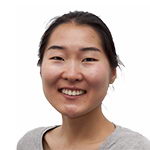
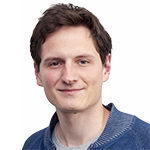
Group Members
-
 Jilles VreekenProfessor
 -
 Christina RischSecretarial Support
 -
 Lénaïg CornanguerPost Doc
 -
 Joscha CueppersPost Doc
 -
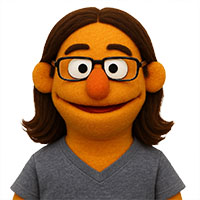 David KaltenpothPost Doc
 -
 Jawad Al RahwanjiPhD Student
 -
 Ghada Nait SaidPhD Student
 -
 Praharsh NanavatiPhD Student
 -
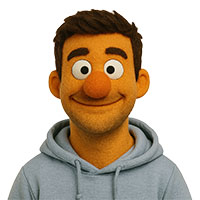 Luis PaulusPhD Student
 -
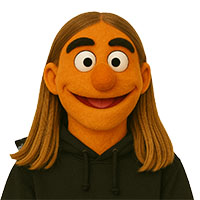 Hendrik SuhrPhD Student
 -
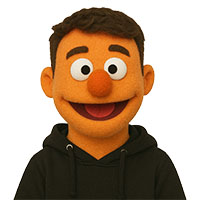 Nils WalterPhD Student
 -
 Sascha XuPhD Student
 -
 Ben BliemMaster Student
 -
 Teodora KamovaBachelor Student
 -
 Florian KandraResearch Assistant
 -
 Tim KruseMaster Student
 -
 Ferdinand KönnekerMaster Student
 -
 Tymur MykhalievskyiMaster Student
Jilles is Faculty (W3) at the CISPA Helmholtz Center for Information Security, where he leads the Exploratory Data Analysis group. He is Honorary Professor of the Department of Computer Science of Saarland University, as well as ELLIS Fellow of the ELLIS Unit Saarbrücken on Artificial Intelligene and Machine Learning.
My research is mainly concerned with causality and unsupervised learning. In particular, I enjoy developing theory and algorithms for answering exploratory questions, such as 'what is going on in my data?' or 'what is going on in my model?' without having to make unnecessary or unjustified assumptions. To identify what is worth knowing, I often employ well-founded statistical methods based on information theory, and then proceed to develop efficient algorithms for extracting useful interpretable results. I like all data types equally much.
Currently I'm investigating techniques for identifying informative and ideally causal structures in large collections of complex data; how to efficiently mine easily interpretable summaries from data; how to determine and discover causal dependencies from observational data; the theoretical and practical foundations of interactive exploration of very large data, discovering things by serendipity; how to mine large relational databases; how to mine very large graphs, including characterising influence propagation in social networks; as well as to study well-founded approaches for meaningfully comparing between, and validation of, explorative results.
ELLIS Unit Saarbrücken
Saarland University
Im Oberem Werk 1, Room 0.01

66386 St. Ingbert, Germany

66123 Saarbrücken, Germany


Christina is faculty office, i.e. the secretarial support, for Jilles and the EDA group.
Im Oberem Werk 1, Room 0.11
66386 St. Ingbert, Germany
66123 Saarbrücken, Germany

Lénaïg Cornanguer is a post-doctoral researcher. Her main research interests are causal inference, discovery of temporal logic from observational data, and explainable anomaly detection.
Lénaïg pursued her PhD at IRISA in Rennes, obtaining her degree from the Université de Rennes 1 for her dissertation titled 'Timed Automata Learning from Time Series' in November 2023. Prior to that, she obtained her Master's of Science in Data Science from the Agrocampus Ouest Engineering School in Rennes, France.
Im Oberem Werk 1, Room 0.03
66386 St. Ingbert, Germany
66123 Saarbrücken, Germany
Joscha Cüppers is a postdoctoral researcher working on novel methods for mining (causal) patterns from data. He is particularly interested in developing methods for discovering interactions and abstractions from sequential data.
Joscha obtained his Bachelor of Science in Computer Science in 2016 from Ulm University and his Master of Science from Saarland University in 2019. He joined the EDA group in 2019 to write his Master's thesis, and stayed to do his PhD. He defended his PhD thesis 'Discovering Actionable Insights from Event Sequences' on September 11th 2025.
Im Oberem Werk 1, Room 0.02
66386 St. Ingbert, Germany
66123 Saarbrücken, Germany
David Kaltenpoth is a postdoc who works on causal inference under realistic conditions, such as confounding, selection bias, or non-i.i.d. data.
David obtained his Ph.D. in Computer Science from Saarland University on November 25th, 2024. His thesis, 'Don't Confound Yourself: Causality from Biased Data,' was awarded the Helmholtz AI Dissertation Award 2024.
David obtained his Master of Science in Mathematics from the Ludwigs-Maximilian Universität München in 2016. He joined the EDA group in June 2016 for a Research Immersion lab, stayed for his Ph.D., and is now a postdoc.
Im Oberem Werk 1, Room 0.03
66386 St. Ingbert, Germany
66123 Saarbrücken, Germany
Jawad Al Rahwanji is a PhD student in the EDA group. He works on explainable neuro-symbolic methods and is particularly interested in applications in the biomedical domain. He is a member of the Research Training Group on Neuro-Explicit Models.
Jawad obtained his Master's of Science in Data Science and Artificial Intelligence from Saarland University in 2025. He wrote his Master's thesis with us on differentiable subgroup discovery in time-to-event (survival) data. Previously, he obtained his Bachelor of Engineering in Information Technology Engineering in 2021 from Damascus University, specializing in artificial intelligence.
Saarland University
Im Oberem Werk 1, Room 0.02
66386 St. Ingbert, Germany
66123 Saarbrücken, Germany
Ghada is a PhD student in the EDA group. She is interested in understanding machine learning models by combining ideas from data mining and continuous optimization. Her broader interests include analyzing learned model representations, actionable pattern discovery, and explainable machine learning for real-world applications.
Before joining us as a PhD student, Ghada obtained her Master's degree in Data Science and Artificial Intelligence from Saarland University. She wrote her Master's thesis with us on analyzing the internal workings of neural networks by linking interpretable concepts across layers through scalable rule mining. Alongside her Master's studies, she worked in data scientist and data analyst roles on real-world data analysis and machine learning problems. Previously, she obtained her Bachelor's degree in Computer Science from the University of Batna 2 in Algeria, specializing in Information Systems.
Saarland University
Im Oberem Werk 1, Room 0.05
66386 St. Ingbert, Germany
66123 Saarbrücken, Germany
Praharsh Nanavati is a PhD student working on causality. He is a member of the Research Training Group on Neuro-Explicit Models.
Praharsh worked as a Predoctoral Researcher in Causal Fairness at the CSA Department at the Indian Institute of Science. Previously, he received a BS-MS degree in Data Science and Engineering from IISER Bhopal, India in 2024, where he worked on causal representation learning with minimal DAG knowledge as part of his Master's thesis.
Saarland University
Im Oberem Werk 1, Room 0.03
66386 St. Ingbert, Germany
66123 Saarbrücken, Germany
Luis Paulus is a PhD student working on neuro-symbolic knowledge discovery and machine learning.
Luis obtained both his Master's and Bachelor's in Computer Science from Saarland University. He wrote his Master's thesis on how to efficiently discover high-quality rule sets from massive binary datasets using continuous optimization, and his Bachelor's thesis on reinforcement curriculum learning. He was a tutor for Programming 1 and the Math Preparatory Course, part of the CS Bachelor Honor's Program, did an Erasmus semester in Bergen, Norway, and likes rowing.
Saarland University
Im Oberem Werk 1, Room 0.03
66386 St. Ingbert, Germany
66123 Saarbrücken, Germany
Hendrik will join us as a PhD student from March 1st. Hendrik is a PhD student interested in exploratory data analysis in general, be it pattern mining, anomaly detection, and/or causal analysis.
Hendrik obtained his Master's in Computer Science and his Bachelor's in Mathematics and Computer Science from Saarland University. He wrote his Master's thesis on how to detect and characterize rare exceptions in data. He was a student assistant at the Saarland University Competence Center, worked at retailSolutions, and likes traveling and playing football.
Saarland University
Im Oberem Werk 1, Room 0.02
66386 St. Ingbert, Germany
66123 Saarbrücken, Germany
I am a Ph.D. student at CISPA Helmholtz Center for Information Security, supervised by Jilles Vreeken. I am broadly interested in robust and explainable machine learning for large-scale real-world applications. In my Ph.D, I intend to develop new approaches that are at the same time descriptive and predictive. That is the models not only offer predictive capabilities but also facilitate practitioners to gain deeper insights into the problems they are addressing.
I obtained my Bachelor's and Master's degrees in Computer Science from Saarland University. Before joining CISPA, I was a research assistant in the goup of Bernt Schiele at the Max-Planck-Institut for Informatics, supervised by David Stutz . My research focused on adversarial and out-of-distribution robustness of Quantized Neural Networks. I also worked on the influence of Batch Normalization on the vulnerability and generalization capabilities of neural networks.
Saarland University
Im Oberem Werk 1, Room 0.02
66386 St. Ingbert, Germany
66123 Saarbrücken, Germany
Sascha Xiaguang Xu is a Ph.D. student who works on the intercept between causality and explainability.
Sascha obtained his Bachelor's and Master's degrees from Saarland University, respectively in 2019 and 2022. During this time he worked with us a student research assistant on the topic of bivariate causal inference in the presence of heteroscedastic noise, which led to an ICML paper in 2022.
Saarland University
Im Oberem Werk 1, Room 0.02
66386 St. Ingbert, Germany
66123 Saarbrücken, Germany
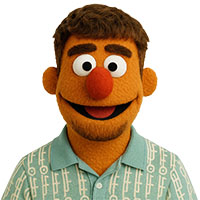
Ben – or, if you want to be formal, Benedict – is pursuing his Master of Science degree in Data Science and AI at Saarland University. Previously, he obtained his Bachelor's degree also from Saarland University. He wrote his Bachelor's thesis with us on the topic of multi-modal subgroup discovery.
Im Oberem Werk 1, Room 0.05
66386 St. Ingbert, Germany
66123 Saarbrücken, Germany
Teodora is pursuing a Bachelor's degree in, and part of the Honor programme of, Computer Science at Saarland University. She is broadly interested in gaining understanding of how large models reach their conclusions. She is writing her Bachelor's thesis with us on mechanistic interpretability, and is, in parallel, also a Research Assistant working on tokenization.
Previously, she tutored Programming 1 and the Mathematics Preparatory Course, and worked with Prof. Vera Demberg on LLMs and natural language processing.
Im Oberem Werk 1, Room 0.14
66386 St. Ingbert, Germany
66123 Saarbrücken, Germany
Florian holds a Master's scholarship from the Konrad-Zuse School ELIZA and is pursuing a degree in Computer Science at Saarland University. He is a research assistant in the EDA group, working on interpretability and explainability.
Florian obtained his Bachelor's in Computational Linguistics from Saarland University. He was a tutor for six different lectures, among which on Statistics, NLP Algorithms, and Semantics.
Im Oberem Werk 1, Room 0.05
66386 St. Ingbert, Germany
66123 Saarbrücken, Germany
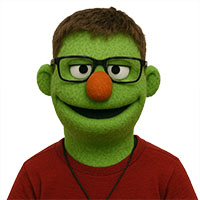
Tim is pursuing his Master of Science in Data Science and AI at Saarland University. He is currently writing his Master's thesis with us on mechanistic interpretability.
Tim obtained his Bachelor's in Data Science and AI from Saarland University. He wrote his thesis on how to discover and characterize anomalies identified by deep vision models.
Im Oberem Werk 1, Room 0.05
66386 St. Ingbert, Germany
66123 Saarbrücken, Germany
Ferdinand is pursuing a Master's of Science in Computer Science at Saarland University. He is currently working on his Master's thesis.
Im Oberem Werk 1, Room 0.05
66386 St. Ingbert, Germany
66123 Saarbrücken, Germany
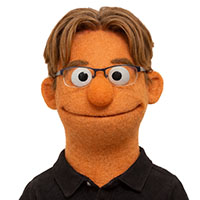
Tymur is pursuing his Master's of Science in Computer Science at Saarland University. He is currently exploring possible topics for his Master's thesis.
Im Oberem Werk 1, Room 0.05
66386 St. Ingbert, Germany
66123 Saarbrücken, Germany
Alumni — Ph.D. Students and Postdocs
Alumi — Students